


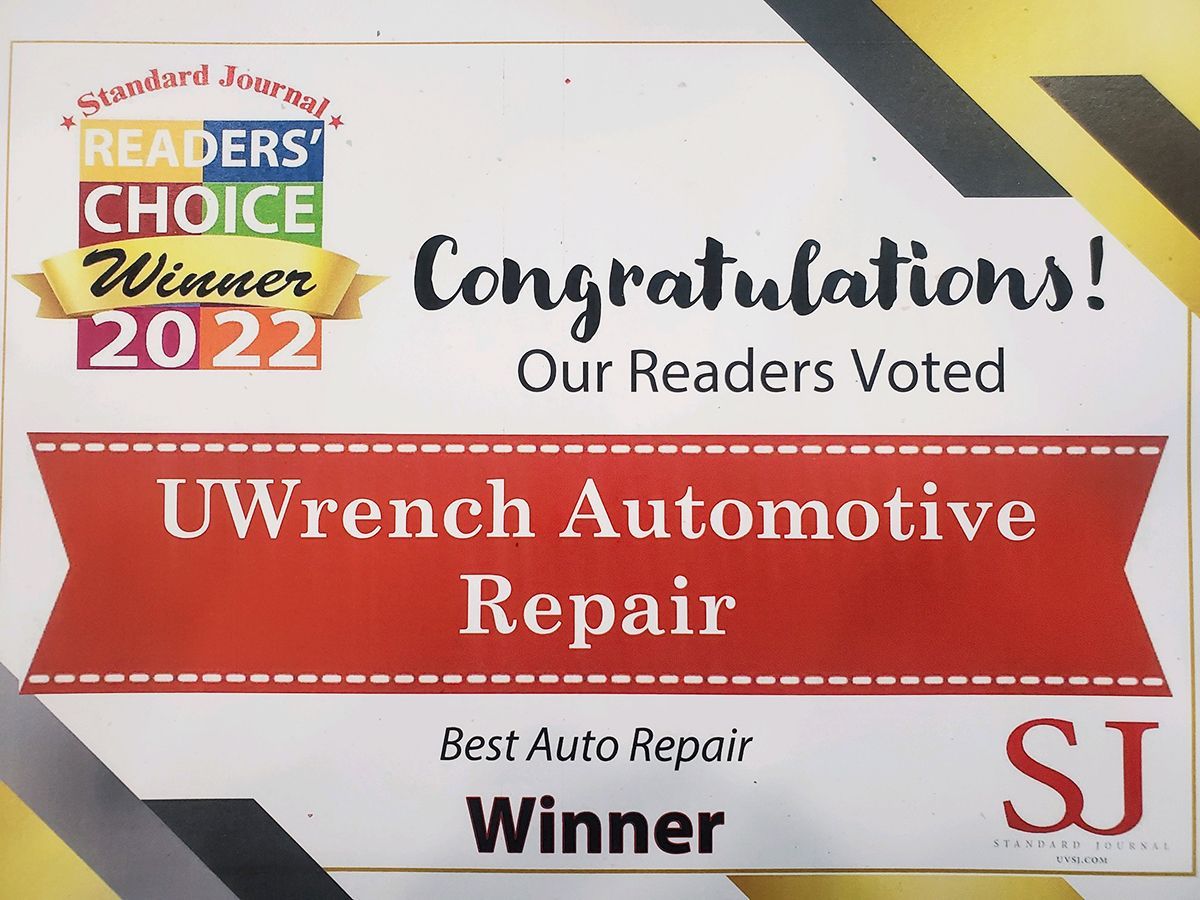
We are incredibly proud and grateful to share some exciting news: Madison Automotive was voted a 2022 Reader’s Choice Award winner for the Rexburg, Idaho area! Being recognized by our local community means everything to us. The Reader’s Choice Awards are especially meaningful because they are voted on by the people who know us best—our customers, neighbors, and fellow Rexburg residents. To be chosen among so many outstanding local businesses is truly an honor. At Madison Automotive, our mission has always been to provide honest, reliable automotive service with a personal touch. From routine maintenance to major repairs, we strive to treat every customer like family and every vehicle like our own. This award is a reminder that our commitment to quality and integrity is being felt and appreciated. We want to say a huge thank you to everyone who voted for Madison Automotive and continues to support local businesses. Your trust, loyalty, and referrals are the reason we’re able to do what we love every day. As we look toward the future, we’re more motivated than ever to continue serving Rexburg and the surrounding communities with the same dedication that earned us this recognition. Whether you’ve been coming to Madison Automotive for years or are just getting to know us, we’re honored to be your trusted local automotive repair shop. Thank you, Rexburg, for making 2022 a year we’ll never forget—and for choosing Madison Automotive as your Reader’s Choice Award winner!
Proper vehicle maintenance is crucial for ensuring the longevity and performance of your car. While most drivers understand the importance of maintenance, many still make common mistakes that can lead to costly repairs, decreased safety, and a shorter lifespan for their vehicle. In this post, we’ll explore some of the most frequent mistakes people make when maintaining their vehicles and offer practical advice on how to avoid them. 1. Ignoring Routine Oil Changes One of the most common mistakes people make is neglecting to change the oil at the recommended intervals. Engine oil plays a crucial role in lubricating the engine's moving parts, reducing friction, and preventing overheating. Over time, however, oil breaks down and becomes less effective, and without regular changes, it can lead to engine wear, reduced performance, and even engine failure. How to Avoid It: Follow the manufacturer's recommendation for oil change intervals. This can usually be found in the owner’s manual or the maintenance schedule. Modern cars may have longer oil change intervals (up to 7,500 to 10,000 miles), but older models or vehicles with high mileage may need more frequent changes. Pay attention to the color and consistency of your oil; if it looks thick, gritty, or dark, it might be time to change it. 2. Overlooking Tire Maintenance Tires are one of the most important safety components of your vehicle, yet many drivers neglect them. Common mistakes include failing to check tire pressure regularly, neglecting to rotate tires, and ignoring worn-out tread. Low Tire Pressure: When your tires are under-inflated, they create more friction, which increases tire wear and fuel consumption. On the other hand, over-inflated tires can lead to poor handling and an increased risk of blowouts. Uneven Tread Wear: Not rotating your tires regularly can cause uneven wear, which decreases their lifespan and can make driving unsafe, especially in wet or icy conditions. How to Avoid It: Check tire pressure monthly using a reliable tire gauge and adjust it according to the manufacturer’s specifications. Rotate your tires every 6,000 to 8,000 miles to ensure even wear and prolong their lifespan. Inspect tires for signs of damage such as cuts, bulges, or punctures and replace them as needed. Replace tires when tread depth is low, typically when it reaches 2/32 of an inch. 3. Neglecting to Check Fluids Aside from oil, there are several other critical fluids in your vehicle, including coolant, brake fluid, transmission fluid, and power steering fluid. Neglecting to check and replace these fluids at the appropriate intervals can lead to severe damage to engine components, transmission problems, or even loss of braking ability. How to Avoid It: Check fluid levels regularly. Most vehicles have dipsticks or reservoirs that make it easy to check fluid levels. Replace fluids at the recommended intervals. For example, brake fluid and coolant should be replaced every 30,000 to 60,000 miles, depending on your car's make and model. Ensure your engine coolant is in good condition to prevent overheating. 4. Forgetting the Air Filter A clogged or dirty air filter can reduce engine efficiency and performance by restricting airflow to the engine. This can cause the engine to work harder, leading to decreased fuel efficiency and potential engine problems over time. How to Avoid It: Check the air filter every 12,000 to 15,000 miles or sooner if you drive in dusty conditions. Replace the air filter if it looks dirty or clogged. A clean air filter improves engine performance and fuel efficiency. 5. Skipping Brake Maintenance Your brakes are the most critical safety feature of your vehicle, yet many drivers neglect their brake maintenance. Failing to replace worn-out brake pads or ignoring brake fluid changes can result in poor braking performance, longer stopping distances, and, in extreme cases, brake failure. How to Avoid It: Inspect brake pads regularly. If you hear squeaking or grinding noises when braking, it’s time to replace the pads. Check brake fluid levels. Low brake fluid can lead to a soft brake pedal and reduced braking efficiency. Follow your car's manual for brake maintenance intervals. 6. Ignoring the Timing Belt or Chain The timing belt or timing chain ensures that the engine’s valves open and close at the proper time in the engine cycle. A broken timing belt or chain can cause catastrophic engine damage, and it’s often an expensive repair. How to Avoid It: Follow the manufacturer's recommendations for timing belt replacement, usually around 60,000 to 100,000 miles. If your car has a timing chain, it may last longer, but it still requires regular inspection. 7. Neglecting the Battery A dead battery is one of the most common reasons vehicles break down, and yet many drivers overlook basic battery maintenance. Corrosion on battery terminals and a lack of regular checks can lead to poor performance and premature battery failure. How to Avoid It: Inspect the battery terminals for corrosion and clean them if necessary. A mixture of baking soda and water can help remove corrosion. Check the battery charge if you notice dimming headlights or trouble starting the car. If your car is older, replace the battery every 3-5 years, as battery life diminishes over time. 8. Improper Use of the Parking Brake Using the parking brake improperly can cause unnecessary wear on the braking system and even lead to malfunctioning. Some drivers may fail to engage the parking brake at all, while others might use it too frequently or incorrectly. How to Avoid It: Use the parking brake regularly, especially if you’re parked on an incline, to prevent unnecessary stress on the transmission. Avoid relying solely on the parking brake to prevent the car from rolling, particularly in automatic vehicles. Don’t “ride” the parking brake, as this can cause premature wear. 9. Ignoring Warning Lights Dashboard warning lights are your car’s way of alerting you to potential problems. Ignoring these warnings can lead to more significant, costly issues down the road. How to Avoid It: Don’t ignore warning lights. Even if the light seems minor (like the check engine light), have your vehicle checked immediately. Many newer cars have diagnostic systems that allow mechanics to pinpoint issues quickly. Ignoring these lights could lead to worse issues down the road, including engine failure, transmission problems, or brake malfunctions. 10. Incorrect Tire Alignment and Balancing Tire alignment and balancing are crucial for the smooth operation of your vehicle. Poor alignment can cause uneven tire wear, poor handling, and decreased fuel efficiency. Similarly, improper balancing can lead to vibration and discomfort while driving. How to Avoid It: Get your wheels aligned at least once a year or if you notice your vehicle pulling to one side or uneven tire wear. Balance your tires regularly, particularly when new tires are installed, or if you notice excessive vibration or uneven wear. 11. Overloading Your Vehicle Overloading your vehicle beyond its recommended weight capacity puts unnecessary stress on the engine, suspension, and tires. It can also negatively affect your car's handling and fuel efficiency. How to Avoid It: Follow the manufacturer's weight limits found in your car’s manual or on the door frame. Avoid carrying unnecessary loads, especially heavy cargo, unless it's absolutely necessary. 12. Using Low-Quality or Incorrect Parts Not all replacement parts are created equal. Using cheap, low-quality parts or parts that aren't designed for your specific vehicle model can cause performance issues, damage to other components, or even void warranties. How to Avoid It: Use OEM (Original Equipment Manufacturer) parts or trusted aftermarket parts that are specifically designed for your vehicle. When in doubt, consult your mechanic or refer to the vehicle’s owner’s manual for compatible parts. 13. Delaying Major Repairs Sometimes, drivers put off necessary repairs, hoping that the problem will resolve on its own or because they want to save money. However, delaying major repairs often leads to worsening conditions and bigger, more expensive issues in the future. How to Avoid It: Address issues promptly. If you notice unusual noises, vibrations, or changes in performance, take your vehicle to a mechanic to get it checked out. Regular inspections can catch potential problems early, preventing costly repairs later. Conclusion Maintaining your vehicle is essential for ensuring its longevity, performance, and safety. While many drivers are aware of the basics of vehicle care, it's easy to overlook some critical maintenance tasks or make mistakes that can lead to costly repairs down the road. By avoiding these common mistakes—such as neglecting oil changes, ignoring tire and brake maintenance, and failing to address warning lights—you can keep your vehicle running smoothly and safely for years to come. Remember, regular maintenance isn’t just about saving money—it’s about keeping you, your passengers, and others on the road safe. By staying on top of routine checkups and addressing issues promptly, you’ll enjoy a more reliable, efficient, and long-lasting vehicle.
When it comes to vehicle maintenance, one of the most crucial and often overlooked tasks is regularly changing your oil. While it might seem like a simple, routine chore, keeping your engine oil fresh is essential to ensuring your car runs smoothly and lasts longer. This is especially true for those living in states with extreme weather conditions, such as Idaho. Whether it’s the bone-chilling cold of winter or the scorching heat of summer, your car’s oil plays a pivotal role in protecting the engine from unnecessary wear and tear. But how exactly does temperature impact your oil, and why is it so vital to change it regularly? Let’s dive into this essential topic and break down the reasons why regular oil changes are a must, particularly in Idaho’s extreme weather conditions. What Does Oil Do for Your Engine? Before we delve into why you need to change your oil regularly, let’s first review what oil does for your car's engine. Engine oil is like the lifeblood of your car—it lubricates all the moving parts, reduces friction, helps to regulate the engine temperature, and even aids in cleaning and preventing corrosion. Without clean, well-maintained oil, these engine components would wear down much faster, leading to decreased performance, higher fuel consumption, and ultimately, costly repairs. Lubrication: Oil forms a thin film between moving parts, such as pistons and cylinders, to minimize friction. Without it, metal parts would grind against each other, causing excessive wear. Cooling: The oil helps absorb heat generated during combustion and the engine’s operation, distributing it away from high-temperature areas to prevent overheating. Cleaning: As the oil circulates through the engine, it picks up dirt, carbon, and debris, keeping the engine clean. Over time, this debris can build up, making oil change intervals more critical. Corrosion Protection: Oil helps to protect the engine parts from the damaging effects of rust and corrosion by forming a barrier between metal surfaces and moisture or other corrosive elements. The Impact of Extreme Temperatures on Engine Oil Idaho, with its diverse climate, experiences extreme temperature fluctuations, from blistering summers with highs over 100°F (38°C) to frigid winters that can drop below freezing for extended periods. These dramatic temperature swings can have a significant impact on your vehicle’s engine oil. Here’s how: 1. Oil Thickens in Cold Weather During Idaho’s harsh winters, temperatures can plummet well below freezing, especially in areas like the mountains or the high desert. When it’s cold outside, your engine oil thickens, becoming more viscous and less effective at lubricating the engine. The thicker oil doesn't flow as easily through the engine’s parts, making it harder for the oil to circulate effectively, especially during cold starts. When you start your car on a freezing morning, the engine oil is at its thickest, which can cause extra strain on the engine components. The oil takes longer to reach the necessary parts of the engine, and for a brief period, there is less lubrication. This can lead to increased engine wear and tear, as metal parts rub against each other more than they would if the oil were thin and flowing properly. 2. Oil Becomes Too Thin in Hot Weather On the flip side, Idaho’s scorching summers can cause engine oil to become too thin, especially in areas with long stretches of hot weather. When the temperatures soar, the oil can lose its viscosity, making it less effective at lubricating and protecting the engine. Thin oil doesn’t create a thick enough barrier between moving parts, increasing friction and causing more wear on the engine. High temperatures can also accelerate the rate at which oil breaks down, reducing its ability to clean and protect your engine. This is particularly problematic in cars that are driven for long distances during the summer months, such as road trips or off-roading adventures, common in Idaho’s rural areas. 3. Condensation and Moisture Build-Up The temperature changes between night and day in Idaho, combined with the high humidity in some areas, can cause condensation to form inside your engine. This moisture can mix with the oil, leading to the formation of sludge and acidic compounds that can damage engine components. While a regular oil change can help remove moisture and contaminants, neglecting to change your oil regularly can result in an accumulation of these harmful substances. 4. Thermal Breakdown and Oxidation Oil doesn’t just change in viscosity due to temperature fluctuations—it can also break down chemically when exposed to excessive heat over time. As oil becomes exposed to extreme temperatures, it undergoes a process called oxidation. Oxidation causes the oil to degrade, resulting in reduced performance, the formation of sludge, and the buildup of acids that can corrode engine parts. In the case of hot weather, prolonged driving in temperatures above 90°F (32°C) can accelerate the breakdown of oil, shortening its lifespan. This means that while winter might make oil thick and sluggish, summer heat causes it to degrade rapidly, further underscoring the importance of regular oil changes in extreme climates like Idaho’s. Why Regular Oil Changes Matter in Idaho’s Climate Now that we understand how extreme temperatures can affect your oil, let's break down why regular oil changes are even more critical in Idaho’s climate. 1. Protecting Your Engine in Extreme Conditions In Idaho, driving conditions can vary dramatically depending on the season and the region. For example, during the winter months, you may encounter snow, ice, and road salt, all of which can contribute to moisture and contaminants entering the engine. The oil helps protect against this by lubricating the parts, preventing corrosion, and even carrying away contaminants. Without clean, fresh oil, the engine becomes more susceptible to damage. In the summer, the heat places added strain on the engine, as the oil’s thinning can reduce its ability to protect the engine from heat-related stress. Idaho’s extreme heat can cause more wear and tear on the engine, especially if the oil is past its optimal age or has broken down due to extended use. 2. Preserving Fuel Efficiency When the oil is too thick in cold weather, or too thin in hot weather, it can lead to increased friction and engine drag. This, in turn, can cause your engine to work harder, reducing fuel efficiency. If you’re driving in Idaho, where distances between towns can be quite far and fuel prices can fluctuate, ensuring that your oil is in top condition will help improve fuel economy, saving you money at the pump. 3. Prolonging the Life of Your Vehicle Engines that receive regular oil changes are more likely to last longer and perform better. Regular oil changes remove debris, prevent sludge buildup, and keep the internal components of the engine running smoothly. In a state like Idaho, where driving conditions can be rough, regular oil changes are one of the most cost-effective ways to prevent expensive engine repairs or premature engine failure. 4. Minimizing Risk of Engine Failure In extreme temperatures, the risk of engine failure increases. Cold weather causes oil to become sluggish, and hot weather causes it to degrade. If oil is left unchanged for too long, it becomes less effective at performing its vital functions, leaving the engine vulnerable to overheating, friction, or lack of lubrication. An engine failure can be catastrophic, especially in remote areas of Idaho where help may be hard to come by. How Often Should You Change Your Oil in Extreme Temperatures? So, how often should you change your oil in Idaho, given the extreme temperature variations? For most cars , the general recommendation is to change the oil every 3,000 to 5,000 miles or every three to six months, whichever comes first. However, in extreme temperatures, it may be wise to change it more frequently. In colder climates , consider changing your oil every 3,000 miles during the winter months to prevent sludge buildup, condensation, and thickening of the oil. In hotter climates , during the summer months, frequent oil changes can help combat oil thinning and breakdown. It’s particularly important if you’re driving long distances or in heavy traffic, where the engine temperature can rise. You should also check your owner’s manual for specific recommendations based on your car’s make and model. Some newer vehicles have advanced oil filters and longer intervals between changes, but Idaho’s temperature extremes can still play a role in how often you need to change your oil. Conclusion: Keep Your Engine Running Smoothly Year-Round Your car’s engine is a complex and delicate piece of machinery that depends on fresh, clean oil to run smoothly. In extreme temperatures like those found in Idaho, where the weather can fluctuate dramatically between summer and winter, the need for regular oil changes is more important than ever. By changing your oil regularly, you’ll keep your engine running smoothly, prevent damage, and extend the life of your vehicle. Don’t let the cold winter mornings or hot summer afternoons cause unnecessary wear on your engine. Stay proactive with your car’s maintenance, and remember that oil changes are one of the simplest and most effective ways to protect your vehicle from Idaho’s extreme weather conditions. Whether you’re braving the winter snow or cruising through the summer heat, fresh oil is essential to keeping your engine performing at its best. So, next time you’re due for an oil change, don’t delay—your engine will thank you for it.